Tag: cloud

  • Goodbye Hidden Single Points of Failure: AVD Regional Host Pools Explained

    Goodbye Hidden Single Points of Failure: AVD Regional Host Pools Explained

    What would you do if Azure went down in your region today?
    Not a total global outage — but a partial, messy one where your VMs are healthy, storage is fine, yet users still can’t connect.

    This scenario is why Microsoft has introduced Regional Host Pools for Azure Virtual Desktop, now available in public preview.

    This is not about making your session hosts multi-region.
    It is about removing a long-standing single point of failure in the AVD control plane.

    Let’s break down what’s changed, why it matters, and how to start using it.


    Azure resilience isn’t one thing — it’s layered

    Microsoft Azure resilience works across multiple layers:

    • Global geographies
    • Regions
    • Availability zones
    • Datacentres

    Some services (like Azure DNS or Front Door) are fully global.
    Others — virtual machines and storage — are tied to a region.

    AVD has always sat somewhere in between.

    • The control plane (metadata, brokering, app groups, workspaces) is globally distributed
    • But metadata databases were shared at a geography level

    That meant a database issue in one region could affect host pools in entirely different regions.

    Regional Host Pools are Microsoft’s fix for that architectural risk.


    What are Regional Host Pools?

    Historically, all AVD host pools used a geographical deployment model, where metadata was stored in a shared database for an entire Azure geography.

    With Regional Host Pools:

    • Each supported Azure region gets its own AVD metadata database
    • Metadata is still:
      • Replicated across availability zones
      • Replicated to a paired region for disaster recovery
    • But cross-region dependencies are removed

    The result:

    • Outages are isolated to a single region
    • The AVD control plane becomes significantly more resilient
    • You gain explicit control over where metadata lives

    This is especially important for:

    • Regulated industries
    • Public sector
    • Customers with strict data sovereignty requirements

    What actually changes when you deploy one?

    Functionally? Almost nothing.

    Architecturally? A lot.

    The only visible difference during deployment is a new field:

    Deployment Scope

    • Geographical (legacy)
    • Regional (new)

    Everything else — host pool type, validation environment, assignment type — stays the same.

    ⚠️ This does not:

    • Make session hosts multi-region
    • Replicate FSLogix profiles
    • Replace Azure Site Recovery

    It only hardens the AVD control plane.


    Public preview details (important)

    During preview:

    • Supported regions:
      • East US 2
      • Central US
    • Metadata is replicated between those paired regions
    • More regions will be added gradually as the service approaches GA

    Unsupported features (for now):

    • Session host configuration & updates
    • Dynamic autoscaling
    • Private Link
    • App Attach (still geographical only)
    • Log Analytics errors & checkpoints for regional hosts

    These will hopefully be fix by the time this feature goes GA.


    Enabling the preview

    Azure Portal

    1. Go to Subscriptions
    2. Select your subscription
    3. Settings → Preview features
    4. Register: AVD Regional Resources Public Preview

    PowerShell

    Register-AzProviderFeature `
    -ProviderNamespace Microsoft.DesktopVirtualization `
    -FeatureName AVDRegionalResourcesPublicPreview

    If you’re deploying via PowerShell, you’ll also need:

    • Az.DesktopVirtualization 5.4.5-preview
    • The -DeploymentScope Regional parameter

    Can you convert existing host pools?

    Not yet.

    Currently, you have three options:

    • Wait for Microsoft’s upcoming migration tooling
    • Create a new regional host pool, then:
      • Generate a new registration token
      • Reinstall the AVD agent
      • Move hosts across
    • Use this in testing and labs only (the safest option during preview)

    Also note:

    • Regional objects cannot be linked to geographical ones
    • Host pools, app groups, and workspaces must all share the same deployment scope

    Why this really matters

    Microsoft has been very clear:

    Regional host pools are the future of Azure Virtual Desktop.

    At some point:

    • Creating geographical host pools will be blocked
    • Geographical infrastructure will be retired
    • Regional will be the default — and the expectation

    This change:

    • Removes a hidden single point of failure
    • Improves outage isolation
    • Gives customers real control over metadata placement

    It’s one of the most meaningful architectural improvements AVD has had in years.


    Final thoughts

    If you’re running production workloads today:

    • Start planning your transition
    • Track feature parity as preview limitations close
    • Begin using regional host pools for new environments

    This isn’t a flashy feature — but it’s a foundational one.
    And those are usually the changes that matter most.

  • Habit #1: Standardise and Automate Desktop Image Management

    Habit #1: Standardise and Automate Desktop Image Management

    If you want a stable, cost-efficient Azure Virtual Desktop environment, everything starts with the desktop image.

    Before auto-scale tuning, before patch automation, before application strategy — the quality and consistency of your image determines how effective everything else can be.

    In almost every inefficient AVD environment I’ve reviewed, image management is either:

    • Manual
    • Inconsistent
    • Poorly documented
    • Or all three

    Highly effective admins treat image management as a repeatable, automated process, not a one-off task. This is where real operational and cost gains begin.


    Why desktop image management is foundational

    Your desktop image influences:

    • How quickly can new session hosts be deployed
    • How predictable the user experience is
    • How easy it is to troubleshoot incidents
    • How confidently can we automate later stages

    If image management is inconsistent, every downstream optimisation becomes harder and more expensive.


    The common anti-patterns

    In less mature AVD environments, image management often looks like this:

    • Images built manually in the Azure portal
    • Multiple “golden images” with no clear owner
    • No versioning or rollback strategy
    • Apps are baked in inconsistently
    • No naming or governance standards

    These patterns increase:

    • Operational risk
    • Engineering effort
    • Time to recover from issues

    How highly effective admins manage images

    Highly effective admins standardise and automate image management using Nerdio Manager for Enterprise as the control plane.

    Their approach focuses on consistency, governance, and repeatability.


    1. Create images directly in Nerdio

    Images are created and managed inside Nerdio rather than manually in Azure.

    This provides:

    • A guided, repeatable workflow
    • Built-in automation for image creation and sealing
    • Clear visibility into image state and lifecycle

    The goal is not speed — it is consistency.


    Understanding how Nerdio captures images (and why it matters)

    It’s worth briefly explaining how image capture works in Nerdio, as this directly impacts where applications, automations, and OS changes should be applied — and it’s one of the most common areas of confusion I see with customers.

    When you create a desktop image in Nerdio, the process starts by creating a source image VM.

    At this point, you have two paths.


    Option 1: “Do not create image object” (recommended)

    If you select Do not create image object during image creation, Nerdio will:

    • Create the source image VM
    • Stop the workflow at that point

    No image object is captured yet.

    This is useful when you want to:

    • Install applications
    • Run automations or scripted actions
    • Apply OS or security configuration

    directly on the source VM before capturing the image.

    This approach ensures the source VM is always:

    • Fully up to date
    • Free of security vulnerabilities
    • Aligned with what admins expect to see when they later edit the image

    Because of this, this is the approach I generally recommend.


    Option 2: Automatic image capture via a temporary VM

    If you don’t select this option, Nerdio will:

    • Take a copy of the source VM’s OS disk
    • Create a temporary VM from that disk
    • Run any configured automations or application deployments on the temp VM
    • Sysprep the temp VM
    • Capture the final image object

    The key thing to understand here is:

    Any configurations applied during image creation are applied only to the temporary VM, not the source VM.

    This distinction is subtle but important — and it’s the single biggest cause of confusion I see when customers later expect to find changes on the source image VM.

    Nerdio Image Creation Process
    Nerdio Image Creation Process

    Why this matters operationally

    If admins later:

    • Edit the source image VM
    • Expect applications or settings to be present
    • Or assume the source VM reflects the deployed image

    They can be caught out if those changes were applied only to the temp VM.

    For that reason, keeping the source image VM as the authoritative, up-to-date representation of the image avoids ambiguity and reduces operational risk.


    Common image creation pitfalls to be aware of

    Trusted Launch and BitLocker

    Trusted Launch is a great security feature and one I generally recommend — but it’s important to understand its side effects.

    • Enabling Trusted Launch automatically enables BitLocker
    • If BitLocker is enabled when Sysprep runs, image capture will fail

    To avoid this:

    • Either disable BitLocker before capturing the image
    • Or select Trusted Launch supported instead of Trusted Launch

    The Trusted Launch supported option keeps the image compatible with Trusted Launch host pools without enabling BitLocker on the image VM.


    Marketplace images and BitLocker (Windows 11 / 25H2)

    When building a desktop image from newer marketplace images (such as Windows 11 25H2), BitLocker is enabled by default.

    Before capturing an image, you must:

    • Explicitly disable BitLocker on the source VM

    Why does BitLocker sometimes re-enable itself

    I’ve also seen cases where:

    • BitLocker is disabled on the source VM
    • An image is captured successfully
    • Session hosts are deployed
    • BitLocker later re-enables automatically

    If this behaviour is not desired, you can prevent it by setting the following registry value on the image:

    HKEY_LOCAL_MACHINE\SYSTEM\CurrentControlSet\Control\BitLocker
    PreventDeviceEncryption

    This ensures BitLocker does not automatically re-enable on newly deployed hosts.


    2. Maintain a single source-of-truth image per workload

    Once image creation is standardised, the next critical step is controlling image sprawl.

    Highly effective admins deliberately limit the number of desktop images they manage. Rather than creating bespoke images for every host pool or team, they define a single source-of-truth image per workload.

    Examples might include:

    • A core Office/knowledge worker image
    • A Power BI or data analyst image
    • A developer tooling image

    Each image has a clear purpose, a defined owner, and a documented scope.


    Why image sprawl is so expensive

    In environments where image governance is weak, I often see:

    • Slightly different images per host pool
    • “Temporary” images that become permanent
    • Multiple images solving the same problem in different ways

    This quickly leads to:

    • More patching effort
    • More testing effort
    • Inconsistent user experience
    • Longer incident resolution times

    Every additional image increases operational cost — even if Azure spend looks unchanged.


    What “source of truth” actually means

    A source-of-truth image is:

    • The authoritative image for a workload
    • Used consistently across environments
    • Updated intentionally, not ad hoc

    When something breaks in production, admins can immediately ask:

    “Did this come from the image — or somewhere else?”

    That clarity is invaluable during incidents and change reviews.


    Shared images across environments

    Highly effective admins use the same image version across:

    • Test
    • Validation
    • Production
    • (Where appropriate) DR

    This does not mean skipping testing. It means:

    • Test the image once
    • Promote the same version forward

    This dramatically reduces:

    • Duplicate testing
    • Configuration drift
    • Environment-specific surprises

    Avoiding the ‘one image per host pool’ trap

    A common misconception is that:

    “Each host pool needs its own image.”

    In reality, most differences between host pools can be handled through:

    • Application delivery mechanisms
    • Configuration at host creation
    • User or group targeting

    Keeping the image itself generic and workload-focused preserves flexibility while keeping maintenance overhead low.


    Operational benefits

    Maintaining a single source-of-truth image per workload:

    • Simplifies troubleshooting
    • Reduces admin effort
    • Improves predictability
    • Makes audits and reviews easier

    More importantly, it ensures image management scales with the business, not against it.


    Where this fits in the bigger picture

    Without this discipline:

    • Patch automation becomes risky
    • Reimaging becomes inconsistent
    • Autoscale amplifies mistakes faster

    With it:

    • Every downstream automation becomes safer and easier to reason about

    This is why source-of-truth images are a core maturity marker in well-run AVD environments using Nerdio Manager for Enterprise.


    3. Keep desktop images intentionally minimal

    One of the biggest differentiators between mature and immature AVD environments is what gets baked into the image.

    Highly effective admins design desktop images to be intentionally minimal. The goal is not to create a “fully loaded” desktop, but a stable, predictable foundation that can be reused everywhere.


    What belongs in the image

    A well-designed image typically includes:

    • Core OS configuration
    • Required runtimes and frameworks (e.g., VC++ redistributables, .NET)
    • Baseline security and system settings

    These are components that:

    • Change infrequently
    • Are required for almost every user
    • Would cause instability or performance issues if missing

    What does not belong in the image

    Equally important is what you intentionally exclude.

    Highly effective admins avoid baking in:

    • Frequently updated applications
    • Department-specific tools
    • User-driven or role-specific software
    • Anything that requires frequent testing

    Including these increases:

    • Image rebuild frequency
    • Testing effort
    • Risk of regressions

    And, over time, image management becomes a bottleneck rather than an enabler.


    Why “fatter” images create operational drag

    Images that try to do everything tend to:

    • Take longer to build and validate
    • Break more often
    • Require more rollbacks
    • Slow down troubleshooting

    When something goes wrong, it becomes much harder to determine:

    “Is this an app issue, or an image issue?”

    Minimal images dramatically reduce that ambiguity.


    Design images to change slowly

    A good rule of thumb is:

    If something changes weekly, it probably doesn’t belong in the image.

    Highly effective admins treat the image as:

    • A stable baseline
    • Updated deliberately
    • Changed only when there is a strong justification

    This allows image updates to be:

    • Planned
    • Tested
    • Communicated clearly

    Minimal images enable flexibility later

    Keeping images lean gives you more options downstream:

    • Applications can be layered or targeted
    • Different user groups can share the same image
    • Host pools remain flexible without image duplication

    This is what allows a single source-of-truth image to support multiple use cases without compromise.


    The operational payoff

    Minimal images result in:

    • Faster image build times
    • Easier validation
    • Lower maintenance overhead
    • Fewer production incidents

    Over time, this translates directly into:

    • Lower operational cost
    • Higher platform confidence
    • Easier scale

    Why this matters before moving on

    If images are overloaded:

    • Patching becomes risky
    • Reimaging becomes disruptive
    • Automation amplifies mistakes

    Minimal images are what make safe automation possible, which is why this step is a prerequisite for everything that follows.


    4. Version images deliberately and manage them through Azure Compute Gallery

    Once images are standardised, minimal, and controlled, the next maturity step is treating them as versioned assets rather than mutable objects.

    Highly effective admins never modify images in place. Every meaningful change results in a new image version, managed and stored through Azure Compute Gallery (ACG).


    Why in-place image changes are risky

    Without proper versioning, image changes tend to:

    • Overwrite working configurations
    • Remove rollback options
    • Obscure the root cause of issues

    When something breaks, the question becomes:

    “What changed — and when?”

    If you can’t answer that confidently, versioning isn’t being used effectively.


    What good image versioning looks like

    Effective image versioning has a few consistent traits:

    • Each image change produces a new version
    • Versions are immutable once created
    • There is a clear promotion path (test → prod)
    • Old versions are retained only as long as they add value

    This creates:

    • Predictable change management
    • Safer deployments
    • Faster incident resolution

    Why Azure Compute Gallery matters

    Storing images in Azure Compute Gallery adds governance that manual image management simply can’t provide.

    It enables:

    • Native image versioning
    • Controlled replication
    • Cross-region reuse if required
    • Lifecycle management of old versions
    • Trusted Launch and Confidential VM support

    For organisations with multiple regions or DR requirements, this becomes essential rather than optional.


    Controlling image sprawl with retention policies

    Highly effective admins don’t keep every image version forever.

    They:

    • Retain a defined number of previous versions
    • Automatically clean up older images
    • Keep enough history for rollback without creating clutter

    This avoids:

    • Unmanaged image growth
    • Confusion during deployments
    • Unnecessary storage overhead

    Versioning without retention is just delayed sprawl.


    Operational clarity during incidents

    When images are versioned and centrally managed, incident response becomes much simpler.

    Admins can immediately identify:

    • Which image version is in use
    • When it was introduced
    • What changed compared to the previous version

    This shortens:

    • Mean time to identify issues
    • Mean time to recover
    • Overall impact on users

    Why does this enable everything that follows

    Image versioning is what makes:

    • Patch automation safe
    • Scheduled reimaging predictable
    • Autoscale reliable
    • Rollbacks low-risk

    Without it, automation amplifies uncertainty. With it, automation becomes controlled and reversible.


    The maturity signal

    If you want a quick indicator of image maturity, ask:

    Can we roll back our desktop image confidently and quickly?

    If the answer is yes, versioning is working. If not, it isn’t.


    5. Apply clear naming standards and lightweight image governance

    By the time image creation, scope, minimalism, and versioning are in place, the final step is often the most overlooked — making images easy to understand and safe to operate.

    Highly effective admins apply simple, consistent naming standards and lightweight governance to prevent mistakes before they happen.


    Why naming matters more than it seems

    In environments without naming standards, images quickly become:

    • Hard to distinguish
    • Easy to misuse
    • Risky during changes or incidents

    Admins end up asking:

    “Is this the current image?” “Is this safe to deploy?” “What does this image actually contain?”

    Those questions cost time — and time costs money.


    What good image naming looks like

    Effective naming conventions are:

    • Predictable
    • Descriptive
    • Human-readable

    A common and effective pattern is:

    OS | Workload | Image Version | Build Date

    For example:

    Win11 | Office | v1.3 | 2025-01

    From the name alone, anyone should be able to tell:

    • What OS is it based on
    • Who it’s intended for
    • Whether it’s current or obsolete

    Clearly distinguish active vs deprecated images

    Highly effective admins make it obvious which images:

    • Are approved for deployment
    • Are retained for rollback only
    • Should no longer be used

    This can be achieved through:

    • Naming conventions
    • Descriptions or tags
    • Controlled access – stage image as inactive

    Ambiguity is one of the most common causes of accidental misconfiguration.


    Keep governance intentionally lightweight

    Image governance does not need to be heavy or bureaucratic.

    In practice, it usually means:

    • Defined ownership of each image
    • Clear promotion criteria (e.g., tested, approved)
    • Agreement on when images are retired

    The goal is not process for its own sake — it’s operational safety.


    Why this matters at scale

    As environments grow:

    • More admins get involved
    • Changes happen more frequently
    • The cost of mistakes increases

    Clear naming and governance:

    • Reduce human error
    • Speed up troubleshooting
    • Make handovers and audits easier

    It’s one of the highest ROI habits you can adopt.


    The final maturity check

    A simple test:

    Could a new admin confidently select the correct image without asking for help?

    If the answer is yes, governance is working.


    The cost optimisation impact

    Standardised image management:

    • Reduces build and provisioning time
    • Lowers troubleshooting effort
    • Prevents configuration drift
    • Enables every downstream automation to work reliably

    While image management alone won’t cut your Azure bill in half, it enables every other optimisation habit to work properly.


    Final thoughts

    If your image process is manual or inconsistent, no amount of auto-scale tuning will fully compensate for it.

    Highly effective Nerdio admins:

    • Standardise and automate image creation
    • Govern image usage
    • Version everything
    • Let automation do the heavy lifting
    • Treat images as managed assets

    This is the foundation that makes all other AVD cost and performance optimisations possible.

    Once image management is under control, you can safely move on to automating patching and host lifecycle, which is where Habit #2 begins.


    This article is part of an ongoing series expanding on the 7 Habits of Highly Effective Nerdio Admins. Deep-dives into each habit will follow, with practical guidance you can apply directly to your environments.

  • 7 Habits of Highly Effective Nerdio Admins

    7 Habits of Highly Effective Nerdio Admins

    How the best teams optimise Azure Virtual Desktop with Nerdio Manager

    Optimisation in Azure Virtual Desktop (AVD) is not achieved through a single setting or feature. The most successful environments are run by admins who apply consistent operational habits, leverage automation, and regularly review data-driven insights.

    After working with many production AVD environments, a clear pattern emerges. The most efficient, stable, and cost-effective deployments all share the same behaviours.

    Below are 7 habits of highly effective Nerdio admins and how they use Nerdio Manager for Enterprise to optimise without sacrificing performance or user experience.


    1. Standardise and automate desktop image management

    Highly effective admins never build images manually in Azure.

    Instead, they:

    • Create and manage desktop images directly in Nerdio
    • Automate sysprep, sealing, and versioning
    • Maintain clean, repeatable image pipelines

    This approach:

    • Eliminates configuration drift
    • Reduces troubleshooting time
    • Enables predictable re-imaging and scaling
    • Lowers operational overhead

    A well-maintained image is the foundation of every efficient AVD environment.


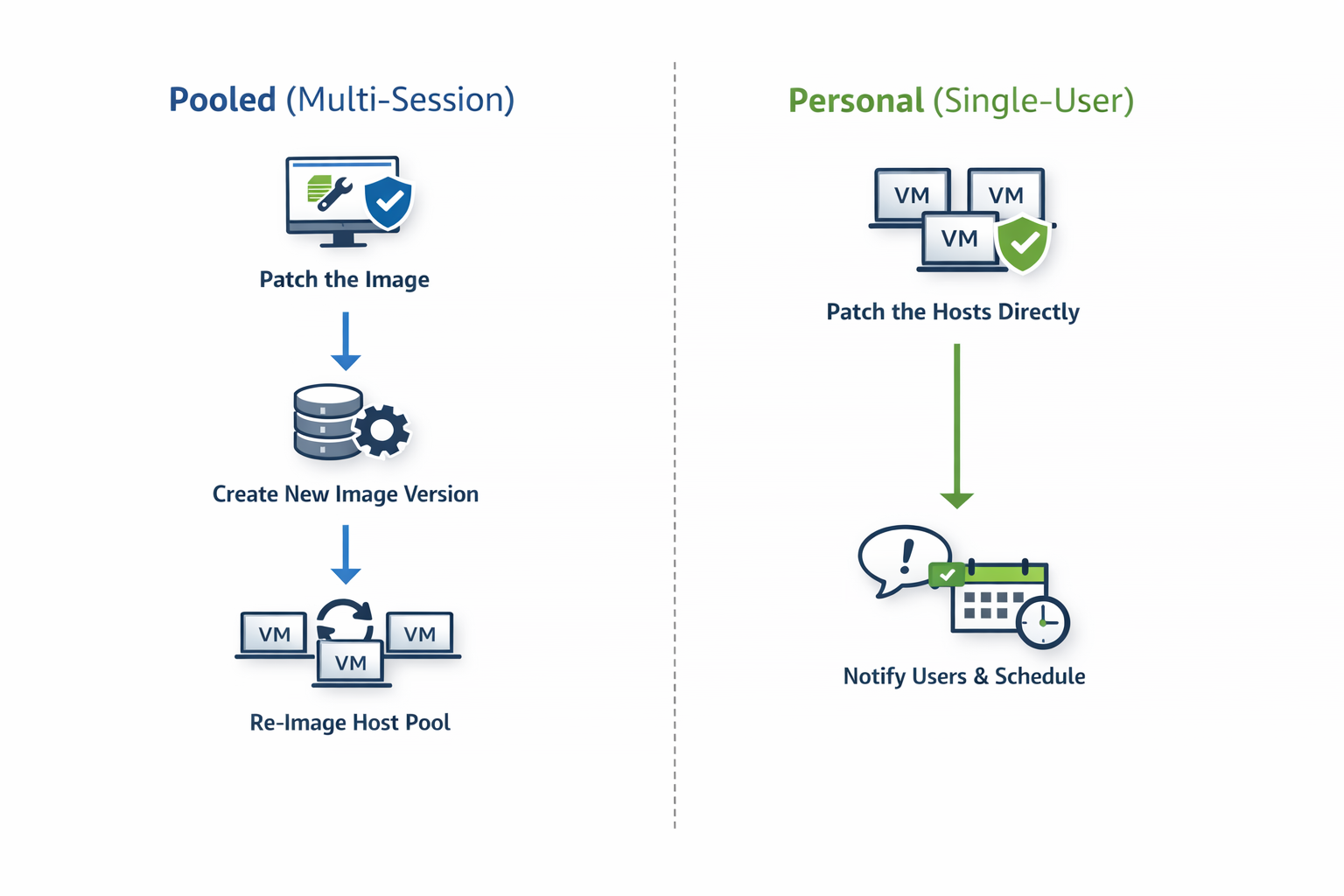
    2. Automate Windows patching (and stop firefighting)

    Manual patching is expensive — not just in Azure costs, but in engineer time and risk.

    Effective admins:

    • Automate Windows Updates on desktop images
    • Patch personal host pools directly where appropriate
    • Schedule updates x days after Patch Tuesday
    • Combine patching with automated image updates and host re-imaging

    The result:

    • Consistent security posture
    • Reduced downtime
    • Fewer emergency maintenance windows
    • Predictable change control

    Automation here directly translates to lower operational cost and reduced risk.

    https://nmehelp.getnerdio.com/hc/en-us/articles/35702669333133-How-can-I-automate-Windows-patching-on-desktop-images-and-session-hosts


    3. Centralise application management with Unified Application Management

    Application sprawl is one of the fastest ways to lose control of costs.

    Top Nerdio admins use Unified Application Management (UAM) to:

    • Deploy applications at image build or host creation
    • Automate app updates
    • Eliminate manual installs and custom scripts

    They standardise on supported methods such as:

    • Public and private WinGet
    • Shell Apps
    • Intune
    • App Attach
    • SCCM integrations

    This delivers:

    • Faster host provisioning
    • Fewer image rebuilds
    • Reduced support incidents
    • Lower administrative effort over time

    Consistency equals efficiency.


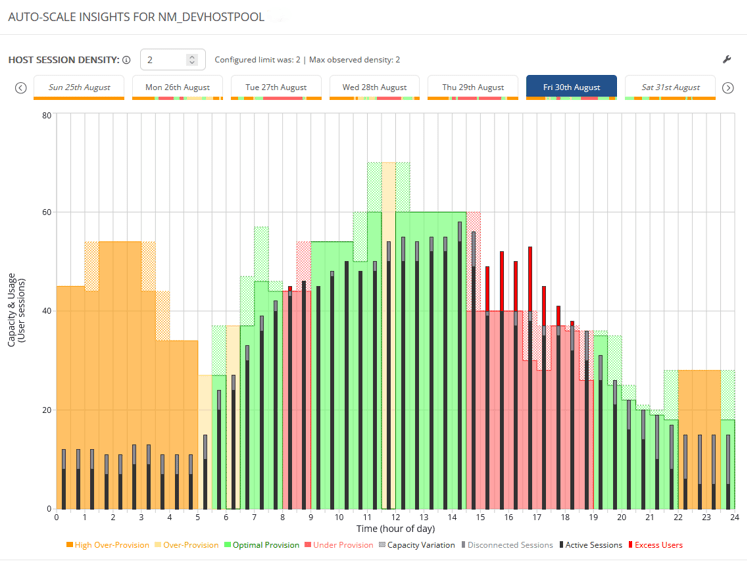
    4. Act on Auto-Scale Insights — not assumptions

    Auto-scale configuration should never be “set and forget”.

    Highly effective admins:

    • Regularly review Auto-Scale Insights recommendations
    • Validate whether host pools are under- or over-provisioned
    • Adjust scaling logic based on real usage patterns

    These insights surface:

    • Idle capacity
    • Over-sized VM SKUs
    • Inefficient scaling schedules

    Admins who act on this data consistently achieve meaningful compute cost reductions without impacting user experience.


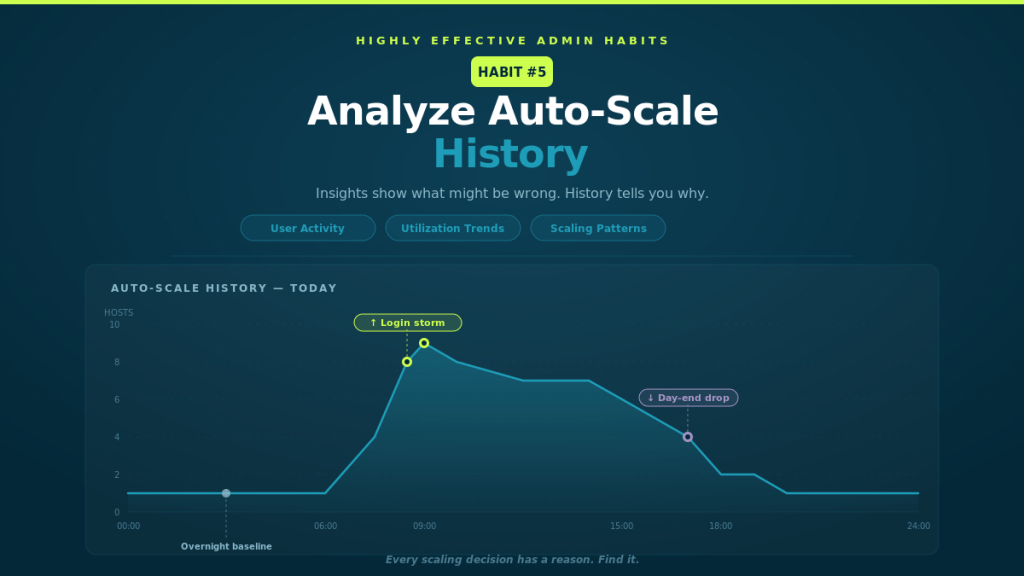
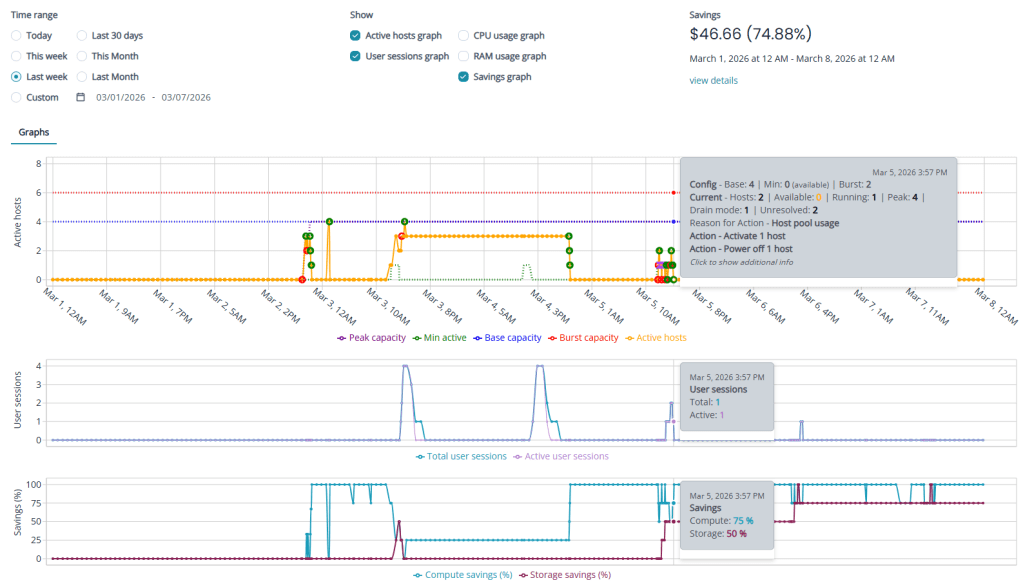
    5. Analyse Auto-Scale history to understand real behaviour

    Insights tell you what might be wrong. History tells you why.

    The best admins:

    • Review Auto-Scale Configuration History
    • Correlate scale-out and scale-in events with session counts
    • Analyse CPU and memory utilisation over time

    This enables:

    • Fine-tuning of session limits per host
    • Right-sizing VM families
    • Confident scaling decisions backed by evidence

    Cost optimisation becomes a data exercise — not guesswork.


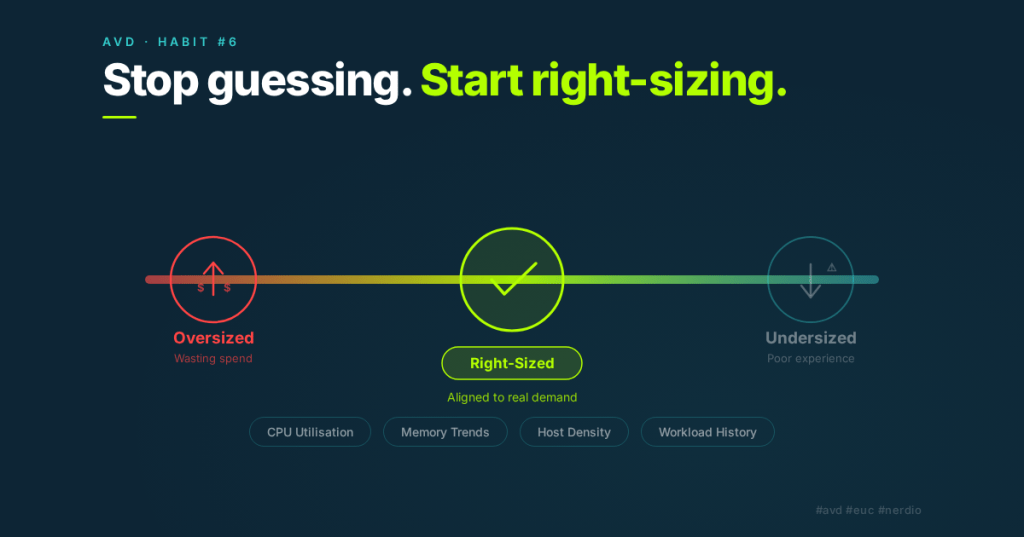
    6. Regularly right-size using Nerdio Advisor

    Even well-designed environments drift over time.

    Effective admins:

    • Review Nerdio Advisor right-sizing recommendations
    • Validate host pool sizing against current demand
    • Identify opportunities to reduce VM size or count

    This is especially powerful after:

    • User growth or reduction
    • Application changes
    • Seasonal usage patterns

    Small, regular adjustments prevent long-term overspend.


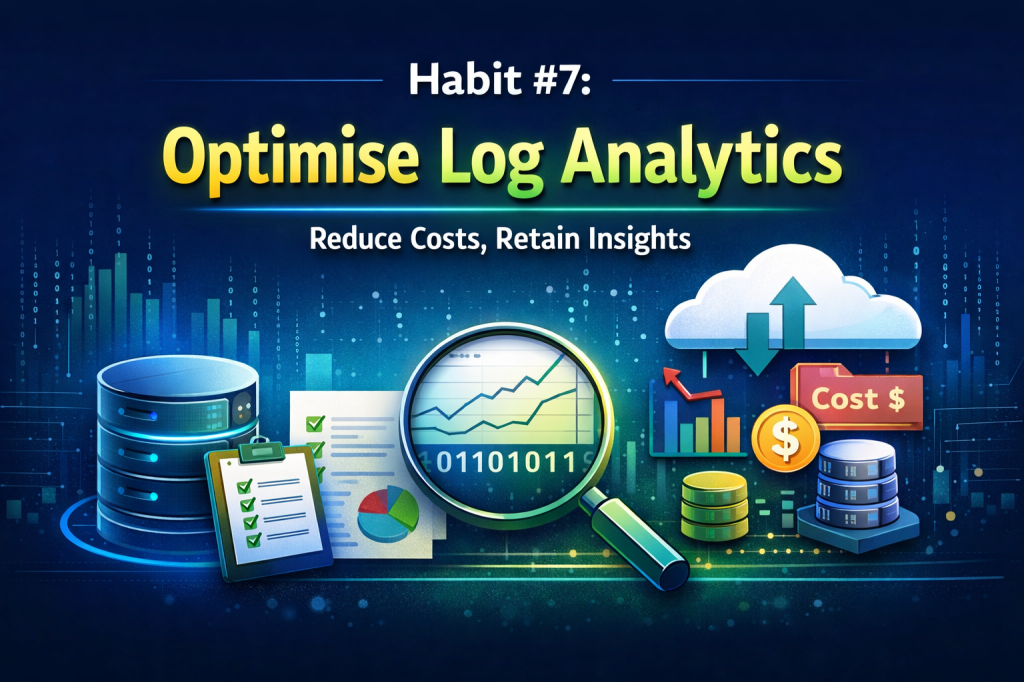
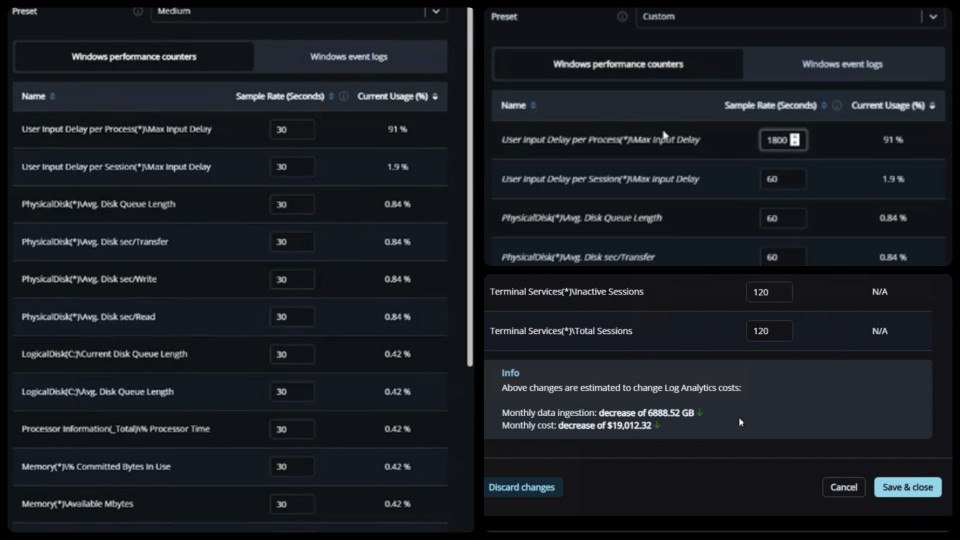
    7. Optimise Log Analytics instead of accepting default costs

    Monitoring is essential — but unmanaged telemetry can quietly inflate Azure bills.

    Highly effective admins:

    • Review Log Analytics data collection
    • Adjust polling intervals and counters
    • Reduce retention where appropriate
    • Balance visibility with cost

    By tuning Log Analytics properly, teams maintain observability while avoiding unnecessary ingestion and storage costs.


    Final thoughts

    Optimisation in AVD is not about cutting corners — it is about operating deliberately.

    Admins who adopt these seven habits:

    • Spend less on Azure
    • Reduce operational toil
    • Improve stability and security
    • Scale with confidence

    If you are already using Nerdio Manager, these capabilities are available today. The difference is not tooling — it is how consistently the tooling is used.

    This is the starting point. I’ll be sharing detailed deep dives into each habit soon, focusing on practical configuration and optimisation tips.

  • AVD Full Cloud-Native Setup With Nerdio- FSLogix with Entra-only Azure Files (No Domain Controllers)

    AVD Full Cloud-Native Setup With Nerdio- FSLogix with Entra-only Azure Files (No Domain Controllers)

    If you’ve been waiting to run Azure Virtual Desktop (AVD) + FSLogix without Windows AD domain controllers or Microsoft Entra Domain Services, Microsoft has now introduced a public preview capability that makes it possible: Microsoft Entra Kerberos authentication for Azure Files SMB with cloud-only identities.

    This unlocks a true cloud-native pattern where:

    • Users are sourced from Microsoft Entra ID (cloud-only)
    • Session hosts are Entra-joined
    • FSLogix profile containers are stored on Azure Files
    • No DCs / no AAD DS required

    Microsoft announced this preview in late 2025 as part of the broader “cloud-native identity” push for Azure Files.

    https://techcommunity.microsoft.com/blog/azurestorageblog/cloud-native-identity-with-azure-files-entra-only-secure-access-for-the-modern-e/4469778


    Important Preview Notice

    This feature is an early public preview, so expect:

    • Documentation changes
    • Portal UI differences (including preview portal links)
    • Updated prerequisites/limitations as it approaches GA

    Treat this as lab first → pilot → production.


    High-Level Steps

    1. Create a storage account and enable Microsoft Entra Kerberos authentication with default share-level permissions (current preview limitation)
    2. Grant admin consent to the Storage Account service principal
    3. Update tags in the App Registration manifest
    4. Disable / exclude MFA for the storage account (Conditional Access)
    5. Configure FSLogix Profile and Session Hosts to Retrieve Kerberos Tickets (registry)
    6. Configure Directory and File-Level Permissions for FSLogix (Critical)
    7. Test end-to-end using an Entra-joined session host + cloud user

    Prerequisites (Read This First)

    OS requirements

    Entra Kerberos for cloud-only identities requires:

    • Windows 11 Enterprise/Pro (single or multi-session), or
    • Windows Server 2025, with the latest updates applied.

    https://learn.microsoft.com/en-us/azure/storage/files/storage-files-identity-auth-hybrid-identities-enable?tabs=azure-portal%2Cintune

    Identity-source limitation

    A Storage Account cannot authenticate to multiple directory sources simultaneously (you must pick one method per account).

    https://learn.microsoft.com/en-us/azure/storage/files/storage-files-identity-auth-hybrid-identities-enable

    Share-permissions limitation (preview)

    For cloud-only identities in this preview, default share-level permissions are the supported approach (applies to all authenticated users accessing shares in the account).

    https://learn.microsoft.com/en-us/azure/storage/files/storage-files-identity-assign-share-level-permissions

    Cloud availability

    This capability is currently scoped to the Azure public cloud, with limitations outlined in Microsoft documentation.

    https://learn.microsoft.com/en-us/azure/storage/files/storage-files-identity-auth-hybrid-identities-enable

    Recommended test design

    • AVD host pool with Entra ID-joined session hosts
    • Azure Files Premium
    • Two Entra groups: Storage Admin / Cloud Users

    Step 1 — Create Storage Account and Enable Microsoft Entra Kerberos Authentication on Storage Account with Default Share-Level Permissions

    1. In Nerdio Manager, navigate to Storage → Azure Files
    2. Select New Azure Files
    3. Enter the storage account name, location, performance, replication, file share name, and capacity
    4. Enable Share-level permission, select SMB Share Contributor, and add the user(s)/group(s) into Permissions (SMB share contributors)
    5. Enable Join AD or Entra ID and select Entra ID
    6. For NTFS file-level permissions, select None
    7. Ok
    Create Azure Files Share in NME
    Create Azure Files Share

    This links Azure Files SMB identity-based access to Entra Kerberos.

    https://learn.microsoft.com/en-us/azure/storage/files/storage-files-identity-auth-hybrid-identities-enable


    Step 2 — Grant Admin Consent to the Storage Account Service Principal

    You must grant admin consent once per storage account used with Entra Kerberos.

    1. Go to Microsoft Entra ID
    2. Navigate to App registrations → All applications
    3. Find the Storage Account app registration (it typically appears with a bracket prefix, [Storage Account xxx.file.core.windows.net])
    4. Open it → Manage API permissions
    5. Click Grant admin consent for your tenant
    6. Yes

    This enables the storage account’s app registration to operate correctly for the Entra Kerberos flow.

    https://learn.microsoft.com/en-us/azure/storage/files/storage-files-identity-auth-hybrid-identities-enable


    Step 3 — Update Tags in the Application Manifest File

    This is one of the “preview sharp edges.”

    1. In the same App Registration, go to Manifest
    2. Locate the tags attribute
    3. Add “kdc_enable_cloud_group_sids”
    4. Save
    Tags in the application manifest
    Tags in the application manifest

    In GA, this may become automated, but for now it’s part of the manual setup path.

    https://learn.microsoft.com/en-us/entra/identity/authentication/kerberos


    Step 4 — Disable MFA for Storage Account Access (Conditional Access Exclusion)

    Entra Kerberos does not support MFA for Azure Files SMB access. If MFA is enforced, you may see errors such as System error 1327 / sign-in restrictions.

    Everyone’s Conditional Access policies will be different; you’ll need to ensure any policies enforcing MFA for all resources and applied to AVD users have an exclusion for the storage account.

    What to do:

    1. Go to Conditional Access
    2. Identify policies that target all resources
    3. Add an exclusion for the Storage Account “app” (search it by name [Storage Account xxx.file.core.windows.net])
    4. Save

    This is a common “why can’t I map the drive” failure mode during testing.


    Step 5 — Configure FSLogix Profile and Session Hosts to Retrieve Kerberos Tickets

    If you skip this, you may get:

    • Credential prompts when mapping the share
    • System error 86

    You must add a registry key to each Entra-joined session host that will access the share. Nerdio can configure this registry value and the FSLogix settings as part of the FSLogix Profiles Storage Configuration.

    • Nerdio Manager → Profiles Management New profile FSLogix
    • Enter the profile name
    • Select Configure session hosts registry for Entra ID joined storage
    • Enter the FSLogix Profiles path (VHDLocation), the UNC path of your storage account, share, and directory (\\<storageaccount>.file.core.net\<share>\<directory>]
    • Configure your remaining FSLogix profile settings
    • Ok
    NME FSLogix Profiles Storage Configuration
    FSLogix Profiles Storage Configuration

    https://learn.microsoft.com/en-us/azure/storage/files/storage-files-identity-auth-hybrid-identities-enable

    Important caveat: This setting can prevent on-premises AD-joined clients from accessing storage accounts via the legacy flow; if you need both Entra and Windows AD access patterns, realm mapping may be required (scenario-specific).


    Step 6 — Configure Directory and File-Level Permissions for FSLogix (Critical)

    Even if FSLogix “works” without this, you risk a serious security issue:

    • Users may be able to access other users’ profile containers

    6A) Validate you can mount the share (from an Entra-joined session host)

    Log on to a session host as a member of your “Storage Admin” Entra group, then run from Command Prompt:

    • net use X: \\<storageaccount>.file.core.windows.net\<share>

    If it fails:

    • Verify Step 5 registry key is present
    • Reboot the session host (often required during early preview workflows)

    6B) Set ACLs using Azure Portal “Manage access” (not File Explorer / icacls)

    In cloud-only identity mode, Microsoft provides an Azure Portal ACL experience for Windows-style permissions on Azure Files SMB.

    https://learn.microsoft.com/en-us/azure/storage/files/storage-files-identity-configure-file-level-permissions

    Preview portal link:

    (If “Manage access” is not visible in the standard portal UI, use that preview link.)

    • In the Azure portal, navigate to your storage account
    • Data storageFiles shares → select share Browse → three dots Manage access
    • Delete everything except the CREATOR OWNER
    • Add your storage admin group with Full control
    • Add your user group and change it to Applies to this folder with Modify access
    Azure Files Share Manage Access
    Manage access

    https://learn.microsoft.com/en-us/fslogix/how-to-configure-storage-permissions

    Why this works:

    • Users can create their own profile folder
    • Creator Owner grants them rights within the folder they created
    • They cannot access other users’ folders
    • Storage admins can troubleshoot, recover, and clean up profiles

    Once configured, save and re-check permissions in the portal or via folder security view (Windows UI may show Entra objects as SIDs in some builds).

    https://learn.microsoft.com/en-us/azure/storage/files/storage-files-identity-configure-file-level-permissions


    Step 7 — Test End-to-End (Moment of Truth)

    1. Log in to AVD as a user in your AVD Users Entra group
    2. Confirm the session signs in successfully (good indicator)
    3. On a session host logged in as a Storage Admin, open the share
    4. Confirm a new user folder is created
    5. Confirm folder/file ACLs show

    You can validate per-folder permissions either:

    • In the Azure portal → Browse → drill into the user profile folder → Manage access
    • Or via Windows folder properties/security view (bearing in mind Entra objects may show as SIDs).

    https://learn.microsoft.com/en-us/azure/storage/files/storage-files-identity-configure-file-level-permissions


    Operational Notes for Production

    Conditional Access design

    You will likely need a targeted strategy such as:

    • Exclude the storage account app from MFA requirements
    • Keep MFA for interactive user sign-in, but avoid breaking SMB access. This is a common real-world friction point.

    Keep tracking preview updates

    Microsoft is positioning this as a foundational capability for modern workloads, including AVD/FSLogix.

    https://techcommunity.microsoft.com/blog/azurestorageblog/cloud-native-identity-with-azure-files-entra-only-secure-access-for-the-modern-e/4469778


    References (Microsoft)

    References (Nerdio)

  • Choosing the Right Nerdio Manager Installation Method: A Practical Guide for AVD Environments

    Choosing the Right Nerdio Manager Installation Method: A Practical Guide for AVD Environments

    If you’ve ever planned a Nerdio Manager for Enterprise (NME) deployment, you may be aware that there isn’t just one way to install it. Depending on how your Azure environment is structured — identities, tenants, permissions, governance, and AVD architecture — the installation path can look very different.

    This is one of the questions I’m asked most often by customers:

    “Which installation method do I actually need to use?”

    To make this easier, I created a simple decision tree (I’ll include a diagram at the end) and broke down each installation type. Whether you’re deploying for a single small environment or a global multi-tenant estate, this guide should point you in the right direction.

    Why are there multiple installation methods?

    Nerdio Manager integrates deeply with:

    • Entra ID
    • Azure subscriptions
    • Azure Virtual Networking
    • AVD / Windows 365 resources
    • App registrations
    • Service principals
    • Resource providers

    Because every customer structures their identity and resource topology differently, NME provides installation paths for a range of real-world scenarios — including restricted RBAC environments and split-tenant setups.

    Summary of All Installation Types

    Here is a high-level overview of all six installation methods available in Nerdio Manager.

    1️⃣ Standard Install (Azure Marketplace)

    The most common and simplest deployment method.

    Use this when:

    • Your user identities and AVD resources live in the same Entra ID tenant.
    • You have the required permissions to deploy and initialise NME.
    • You don’t need to customise the Entra ID application name.

    Typical customers: Most AVD/W365 deployments, POCs, and standard single-tenant setups.

    📄 Guide: https://nmehelp.getnerdio.com/hc/en-us/articles/26124313550477-Nerdio-Manager-Installation-Guide


    2️⃣ Custom Entra ID Application Name

    Some customers need to customise the app registration name (e.g., naming conventions or multiple NME instances in the same tenant).

    Use this when:

    • You do have app creation permissions.
    • You need a non-default app name.
    • You want to avoid conflicts when deploying multiple Nerdio Manager instances.

    📄 Guide: https://nmehelp.getnerdio.com/hc/en-us/articles/26124326251405-Advanced-Installation-Methods


    3️⃣ Split Identity Deployment

    This is for customers whose user identities exist in one Entra ID tenant, while the AVD session hosts and Azure resources live in another.

    This is common with:

    • NHS Trusts
    • Shared services
    • Large groups that centralise identity
    • Multi-organisation structures

    Use this when:

    • You must separate identity governance from Azure resource management.

    📄 Guide: https://nmehelp.getnerdio.com/hc/en-us/articles/26124326194573-Advanced-Installation-Split-Identity


    4️⃣ Pre-Created Entra ID Application

    Some organisations do not allow deployment engineers to create app registrations — typically due to strict RBAC, identity governance, or Conditional Access rules.

    Use this when:

    • You don’t have permission to create an Entra ID app.
    • A separate team (Identity/Security) needs to pre-create the Nerdio app for you.
    • You’ll reference the existing App ID, Secret, and Object ID during initialization.

    📄 Guide: https://nmehelp.getnerdio.com/hc/en-us/articles/26124326326669-Advanced-installation-Create-Entra-ID-application


    5️⃣ External Identities (Guest Accounts)

    Some customers have user identities mastered in another tenant but synchronised into the AVD tenant as guest / external identities. This is not split identity — everything still runs in a single AVD tenant.

    Use this when:

    • Your users are guests from another tenant.
    • You want them to connect to AVD/Windows 365 using External Identities.
    • You want to avoid maintaining a full split-tenant architecture.

    This overlays onto Install Types 1, 2, or 4.

    📄 Microsoft announcement: https://techcommunity.microsoft.com/blog/windows-itpro-blog/windows-365-and-azure-virtual-desktop-support-external-identities-now-generally-/4468103


    6️⃣ Multi-Tenant Deployment

    Once NME is installed, you can manage AVD deployments across multiple Entra tenants from a single console.

    Use this when:

    • You’re an MSP, enterprise group, or global organisation.
    • You want one Nerdio Manager instance for multiple tenants.
    • You need unified monitoring, autoscale, images, apps, and governance across tenants.

    📄 Guide: https://nmehelp.getnerdio.com/hc/en-us/articles/26124299740685-Tenants-Overview


    Putting It All Together — The Installation Decision Tree

    I created a simple flowchart to help customers quickly identify the correct installation type. It includes:

    • Tenant topology
    • Permissions
    • Identity architecture
    • Guest user model
    • Multi-tenant requirements
    Nerdio Manager for Enterprise deployment decision tree
    NME deployment decision tree

    Final Thoughts

    Choosing the right installation method is crucial for:

    • Proper AVD lifecycle management
    • Compliance with your organisation’s identity model
    • Ensuring NME has the permissions it needs
    • Avoiding rework later
    • Supporting multi-tenant or cross-tenant architectures

    If you’re planning a new deployment or reviewing your existing setup, this guide (and the diagram) should help you pick the correct path with confidence.